Low rolling resistant conveyor belts have become a cornerstone in modern industrial operations, offering significant energy savings and enhanced efficiency. As a supplier in this field, I’ve witnessed firsthand how belt design plays a pivotal role in determining the performance of these belts. In this blog, I’ll delve into the various aspects of belt design and their impact on the performance of low rolling resistant conveyor belts. Low Rolling Resistant Conveyor Belt
Material Composition
The choice of materials in belt design is fundamental to achieving low rolling resistance. The cover material, for instance, can greatly affect how the belt interacts with the conveyor system. High – quality rubber compounds are often used for their excellent abrasion resistance and low friction properties. Synthetic rubbers like styrene – butadiene rubber (SBR) and ethylene – propylene – diene monomer (EPDM) are popular choices. SBR offers good mechanical properties and abrasion resistance at a relatively low cost, while EPDM provides superior weather and heat resistance.
The carcass material also matters. Polyester and nylon are commonly used as carcass materials in low rolling resistant conveyor belts. Polyester has a high modulus of elasticity, which means it can withstand high tension with minimal elongation. This property reduces the energy lost due to belt stretching during operation. Nylon, on the other hand, has excellent impact resistance and flexibility, allowing the belt to conform to the conveyor’s pulleys and idlers more easily.
When the cover and carcass materials are carefully selected and combined, the belt can roll more freely on the idlers. This results in less friction and lower energy consumption, which is a key performance indicator for low rolling resistant conveyor belts.
Belt Thickness and Structure
The thickness of the conveyor belt is another critical design factor. A thinner belt generally has lower rolling resistance because it requires less energy to bend around the pulleys and idlers. However, the belt must also be thick enough to withstand the load and the operating conditions. For example, in applications where the belt is exposed to sharp objects or heavy impact, a thicker belt with a more robust structure may be necessary.
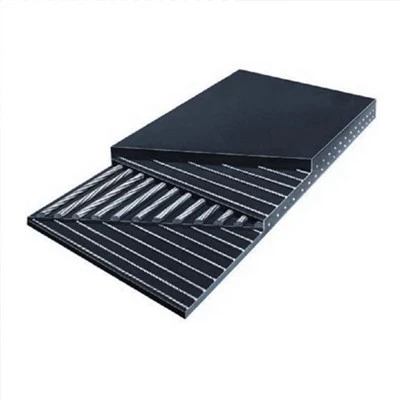
The structure of the belt, such as the number of plies in the carcass, also impacts performance. A multi – ply belt can distribute the load more evenly across the width of the belt, reducing the stress on individual plies. This helps to prevent premature wear and tear and extends the belt’s service life. However, an excessive number of plies can increase the belt’s weight and stiffness, leading to higher rolling resistance. Therefore, finding the optimal number of plies is crucial for achieving a balance between strength and low rolling resistance.
Belt Surface Design
The surface design of the conveyor belt can have a significant impact on its rolling resistance and overall performance. A smooth surface reduces friction between the belt and the idlers, allowing the belt to roll more easily. However, in some applications, a smooth surface may not provide sufficient traction, especially when conveying materials on an inclined plane.
To address this issue, belt manufacturers often use patterned or textured surfaces. For example, chevron patterns can improve the belt’s grip on the material being conveyed, preventing slippage. At the same time, the design of these patterns can be optimized to minimize the increase in rolling resistance. Some advanced belt designs use micro – patterns that provide traction while maintaining a relatively low coefficient of friction with the idlers.
Joint Design
The joint of a conveyor belt is a critical area that can affect its performance. A well – designed joint should have the same strength and flexibility as the rest of the belt. In low rolling resistant conveyor belts, the joint design is especially important because a poorly designed joint can increase rolling resistance and cause premature failure.
There are several types of belt joints, including mechanical joints and vulcanized joints. Mechanical joints are relatively easy to install but may have a higher rolling resistance due to the presence of metal fasteners. Vulcanized joints, on the other hand, provide a seamless connection between the belt ends, which results in lower rolling resistance and better overall performance. However, vulcanization requires specialized equipment and skilled labor.
Impact on Energy Efficiency
One of the most significant impacts of belt design on the performance of low rolling resistant conveyor belts is energy efficiency. As mentioned earlier, a well – designed belt with the right material composition, thickness, surface design, and joint design can reduce rolling resistance. This means that less energy is required to move the belt and the materials it carries.
In industrial settings, where conveyor systems operate continuously, even a small reduction in rolling resistance can lead to substantial energy savings over time. For example, in a large – scale mining operation, reducing the energy consumption of the conveyor belts can result in significant cost savings and a smaller carbon footprint.
Impact on Belt Lifespan
The design of the belt also affects its lifespan. A belt with a proper material selection and structure can withstand wear, tear, and fatigue better. For example, a belt with high – quality cover material and a well – constructed carcass is less likely to develop cracks or delamination.
The surface design can also impact the belt’s lifespan. A belt with a suitable pattern or texture can reduce the stress on the belt caused by the conveyed material, preventing premature wear. Additionally, a well – designed joint ensures that the belt remains intact during operation, further extending its service life.
Impact on Material Handling Efficiency
Low rolling resistant conveyor belts with optimal design can improve material handling efficiency. A belt that rolls smoothly and has good traction can transport materials more efficiently, reducing the risk of spillage and downtime. For example, in a food processing plant, a conveyor belt with a smooth surface and excellent cleanability can ensure the hygienic and efficient movement of food products.

In conclusion, the design of low rolling resistant conveyor belts has a profound impact on their performance in terms of energy efficiency, belt lifespan, and material handling efficiency. As a supplier, I’m committed to providing conveyor belts with the best – in – class design to meet the diverse needs of our customers. Whether you’re looking to reduce energy costs, improve productivity, or enhance the reliability of your conveyor system, the right belt design is essential.
Conveyor Belt Monitoring System If you’re interested in learning more about our low rolling resistant conveyor belts or are considering a purchase for your operation, I encourage you to reach out to our sales team. We’re here to discuss your specific requirements, provide detailed product information, and assist you in finding the ideal belt solution for your application.
References
- "Conveyor Belt Technology: Principles, Operating, Optimizing" by Thomas Bocek
- ASME Conferences Papers on Conveyor Systems and Components
- Publications from major conveyor belt manufacturers such as Continental and Bridgestone for material and design studies
Alumina Technology (Qingdao) New Materials Co., Ltd.
As one of the most professional low rolling resistant conveyor belt manufacturers and suppliers in China, we also support customized service. With abundant experience, we warmly welcome you to buy low rolling resistant conveyor belt for sale here and get quotation from our factory. For price consultation, contact us.
Address: No.448, Jiangshan South Road, Huangdao District, Qingdao City, Shandong Province
E-mail: Gloria.zhang@contitech.cn
WebSite: https://www.altechconveyorbelt.com/
