Hey there, if you’re reading this, chances are you’ve got an electric small forklift and you’re staring at its forks thinking, “Ugh, why won’t these things line up right? Or why’s they wobbling every time I pick up a pallet?” As a supplier of these little workhorses for the past 7 years, I’ve seen every kind of fork adjustment fail—from someone cranking bolts with a wrench so hard they stripped the threads, to folks who just guessed at measurements and ended up damaging pallets or even the forklift itself. Today, I’m gonna break down exactly how to adjust those forks the right way, no fancy tools needed (mostly), and save you from the headaches I’ve watched so many new (and even some seasoned) forklift operators deal with. Let’s dive in. Electric Small Forklift

First, let’s get one thing straight: electric small forklifts aren’t the big diesel monsters you see at construction sites. These compact ones are made for tight spaces—like retail stockrooms, small warehouses, or even loading docks at your local grocery store. Their forks are way more sensitive than the big guys’ because if you mess up, you’re not just dropping a load—you’re probably knocking over a shelf in a 10×12 storage closet that you can barely turn around in. So safety first, always. Before you touch a single fork bolt, shut the forklift off, set the emergency brake, and make sure the mast is all the way down. I can’t tell you how many times I’ve had a customer call me at 8 PM panicking because they tried adjusting forks while the rig was still running and their hand slipped—don’t be that person. Grab a tape measure, a socket wrench (set to the right size—usually 14 or 17mm for our models), and a flathead screwdriver just in case. That’s it. No need for a fancy torque wrench unless you want one, but we’ll get to that later.
Now, why would you need to adjust the forks in the first place? Let’s be real—you’re not doing this just for fun. The most common reasons are: you’re switching between pallets of different widths (some are 48 inches, some are 42, some are custom), your forks got knocked out of alignment from bumping a dock edge (happens to the best of us), or you’re replacing a fork and the new one isn’t sitting right. Whatever the reason, the process is basically the same, but I’ll tailor it for the little electric ones because they don’t have all the extra levers and parts that big forklifts have.
First, let’s talk about how the forks are mounted on our electric small forklifts. Most of our models have a carriage (that’s the metal plate the forks attach to) with two horizontal slots, and each fork slides into place on those slots, then locks down with a couple of bolts. Wait, is that all? Yeah, mostly. But here’s the trick: you can’t just slide the forks anywhere. They have to be symmetric—meaning the distance from the center of the forklift’s mast to the inside of each fork’s tine should be equal. If they’re not, you’re gonna have a lopsided load, and guess what? That’s a recipe for tipping. Electric small forklifts are way lighter than big ones, so even a 1-inch difference can throw the whole balance off. I once had a customer who thought “close enough” was fine, and their forklift tipped over into a stack of soda cases—$1,200 in damages, all because he didn’t line up the forks right. Don’t do that.
So step 1: Measure the current fork positions before you touch anything. Let’s say your mast is the center point. Take your tape measure, measure from the middle of the mast’s face (the flat metal part that holds the carriage) to the inside edge of the left fork. Write that number down. Now do the same to the right fork. If those numbers are the same, cool—you’re just making small tweaks, not moving the whole fork. If they’re off by more than half an inch, that’s your main problem. Now, loosen the bolts on each fork. For our models, the bolts are on the bottom of the carriage, so you might have to get on your knees to reach them (sorry, it’s not the most glamorous part of the job, but it’s necessary). Don’t unscrew them all the way—just loosen them so the forks can slide. If they’re stuck, tap the back of the fork with the flathead screwdriver handle a few times—they should budge without too much force.
Step 2: Slide the forks to the correct width. Wait, how do you know what width to set them to? Good question. The general rule is: set the forks so they’re slightly wider than the pallet you’re using. If the pallet is 48 inches wide, set the inside of each fork 2 inches wider than the pallet’s edges? No, wait, let’s make it simple. Take your tape measure across the two forks—inside to inside. That measurement should be 2-3 inches wider than the pallet’s length (for standard pallets, that’s usually 40 inches, so inside fork measurement would be 42-43 inches). Why? Because if the forks are too narrow, they’ll slip under the pallet’s deck boards and you’ll drop it. If they’re too wide, the pallet might tip between the tines. For our electric small forklifts, we always recommend sticking to standard pallet widths first unless you’re dealing with custom loads—those are a whole other thing, and you should reach out to us if you’ve got weird-sized pallets. Now, slide each fork equally. Remember the symmetry thing? If the left fork is at 10 inches from the mast, the right should be at 10 inches too. Use that center measurement you took earlier to double-check. No guessing here—eyeballing is how you end up with lopsided loads.
Step 3: Tighten those bolts, but don’t overdo it. Okay, this is where a lot of people mess up. You don’t need to crank the bolts until they’re about to break—just tight enough so the forks don’t move when you tug on them. For our electric small forklift models, the recommended torque is 30-40 Nm (Newton meters), but if you don’t have a torque wrench, just use your strength. If you can move the fork with one hand, it’s too loose. If you’re straining to turn the wrench, you’re too tight. Why does this matter? Because if the bolts are too loose, the forks can shift mid-lift, which is dangerous. If they’re too tight, you’ll strip the threads, and then you have to buy new bolts (which is a hassle, and we don’t want that). Once you tighten both sides, tug each fork a couple of times to make sure they’re secure. That’s your quick check.
Wait, but what if your forks have rollers? Some of our newer electric small forklifts have rollers on the carriage to make sliding the forks easier, right? Oh, right—if yours do, make sure those rollers are working before you adjust. Sometimes gunk builds up on the rollers, so the fork won’t slide straight, which can make your alignment off. Wipe the rollers with a rag while you’re under there, and spray a little WD-40 if they’re squeaky. That’s a quick fix that a lot of people miss, and it makes adjusting way smoother.
Now, let’s talk about common mistakes to avoid. First: adjusting one fork at a time. I’ve seen someone slide the left fork all the way to the edge, then the right one, and end up with a huge gap between them. That’s not alignment—That’s a disaster. Always move both forks equally. Second: not checking the alignment after you adjust. Even if you think you did it right, measure again before you lift anything. Third: adjusting the forks while the forklift is running. I know, it sounds obvious, but when you’re in a hurry, it’s easy to hit the “on” switch by accident. Fourth: forgetting to lower the mast. If the mast is up, the carriage is higher, so when you loosen the bolts, it might drop a little and pinch your hand. Trust me, I’ve seen that too.
What if you’re adjusting forks because they’re wobbling? Wobbling usually means the bolts are loose, or the fork pins (the little parts that hold the forks to the carriage) are worn out. If tightening the bolts doesn’t fix the wobble, check the pins. Our electric small forklifts have replaceable fork pins, so if yours are bent or worn, you can pick up new ones from us for like $15 each. No need to buy a whole new fork—just swap the pins. That’s a cheap fix that saves you a ton of money.
Another scenario: you need to adjust the forks for a very heavy load. Our electric small forklifts are rated for 2,000 to 3,000 lbs, depending on the model. If you’re lifting something close to the max capacity, make sure the forks are set as close together as possible without overhanging the pallet. The closer the forks are to the center of the load, the more stable it is. That’s a pro tip I learned after a customer tried lifting a 2,800 lb load with forks 3 feet apart, and the forklift started tilting backward. Don’t do that. For heavy loads, inside fork measurement should be equal to the pallet’s width, no extra space.
Wait, what about if you have a side-shifter on your electric small forklift? A lot of our customers add side-shifters to move the forks left or right without turning the whole rig. If you have a side-shifter, the process is a little different, but still straightforward. First, loosen the side-shifter’s mounting bolts (not the fork bolts), then adjust the side-shifter so the forks are aligned with the mast, then tighten the bolts. The symmetry rule still applies, though—always measure from the mast center to each fork. If you mess up the side-shifter alignment, the forks might not move smoothly, and you’ll get stuck. If that happens, just double-check the bolt tightness and the measurements—9 times out of 10, it’s a loose bolt.
Now, let’s talk about maintenance to keep your forks in good shape. Adjusting them is one thing, but keeping them clean and checked every month will save you a lot of hassle. Wipe the forks down with a rag to get rid of dirt, pallet splinters, and grease—this prevents gunk from building up on the sliding parts. Every month, check the bolts to make sure they’re still tight. And if you notice the forks are bent or chipped, get them replaced right away. Bent forks can cause uneven loads, and chipped edges can tear up pallets. We sell replacement forks for all our electric small forklift models, so no need to go to a hardware store and buy generic ones that don’t fit.
Wait, I should mention—if you’re ever unsure about adjusting your forks, that’s okay. Not everyone’s a mechanic, and that’s why we’re here. A lot of customers try to do it themselves and end up making it worse, so they call us for help. We can walk you through it over the phone, or if you’re local, our techs can come out and adjust them for you for a small service fee. But honestly, most of the time, it’s super simple—just follow the steps I laid out: shut off the forklift, lower the mast, measure symmetry, slide forks equally, tighten bolts, check again.
Now, let’s wrap this up. Adjusting the forks of an electric small forklift doesn’t have to be a big, scary task. It’s just a matter of being careful, taking your time, and not skipping the measurements. I’ve seen so many people waste money on repairs because they tried to rush the adjustment, but if you follow these steps, your forks will line up right, your loads will be stable, and you won’t have to deal with that annoying wobble or lopsided load anymore.
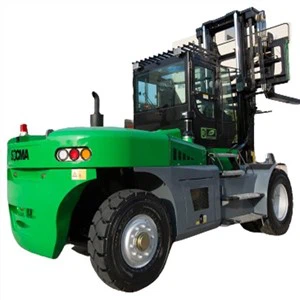
If you’re looking to upgrade your electric small forklift, or you need replacement forks, or you just want a tech to stop by and double-check your fork alignment, we’re here to help. We’ve got all the parts and know-how to keep your forklift running smoothly, so you can focus on getting your work done, not fixing forklift issues. Hit us up to chat about what you need, and we’ll make it happen.
Diesel Small Forklift References
- Occupational Safety and Health Administration. "Forklift Safety Standards for Small Electric Lift Trucks." 2023.
- Forklift Industry Association. "Maintenance Guidelines for Compact Electric Forklifts." 2022.
- Electric Lift Truck Manufacturers Association. "Best Practices for Fork Adjustment on Small Electric Forklifts." 2021.
Fujian SOCMA Machinery Manufacture Co., Ltd.
Fujian SOCMA Machinery Manufacture Co., Ltd. is one of the most professional electric small forklift manufacturers and suppliers in China. We warmly welcome you to buy customized electric small forklift made in China here from our factory. If you have any enquiry about cooperation, please feel free to email us.
Address: Taiwanese Investment Area, Quanzhou, Fujian, China
E-mail: marketing@socmamarketing.com
WebSite: https://www.socma-forklift.com/
