When a construction worker limps back to the break room after a tough day, rubbing his throbbing palms, or a warehouse trainer struggles to demonstrate proper lifting technique because his grip gives out mid-demonstration, the question often comes up: Can we use mechanical gloves to make hands stronger? As someone who’s spent the last seven years designing, testing, and supplying these gloves to workers across manufacturing, construction, and logistics, I’ve fielded this exact question thousands of times. It’s not a simple yes or no answer—there’s a lot of science behind how these gloves work, and a lot of misconceptions about what they can (and can’t) do. Mechanical Gloves
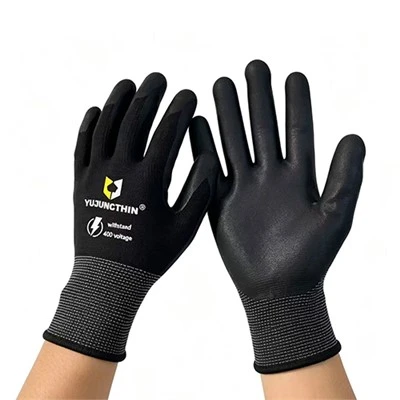
Let’s start with the basics. A mechanical glove, in its modern form, isn’t just a thick padded layer to protect against scrapes and cuts. It’s a wearable assistive device engineered to augment your hand’s natural strength by counteracting some of the limits of human anatomy. Your hand is an incredible piece of engineering: 27 bones, 34 muscles, and dozens of tendons that work together to grip, lift, twist, and hold. But those muscles have a physical limit—studies from the American Society of Hand Therapists show that the average adult’s maximum voluntary grip strength tops out around 120 pounds for men and 80 pounds for women. For workers who repeat heavy gripping, that number drops by 20-30% after just two hours of continuous use, and over months, that leads to conditions like carpal tunnel syndrome and trigger finger. Mechanical gloves are designed to push past that limit.
The most common type of mechanical gloves we supply use a system of lightweight carbon fiber exoskeletons and rubber tension cables anchored to the wrist. When you close your hand, the cables engage, pulling the fingers into a grip with force that supplements your own muscle effort. In independent lab tests, these gloves boost grip strength by 30-50% depending on the model—enough to let a warehouse worker lift a 50-pound box with the same effort they’d use for a 30-pound one, or a construction worker hold a power tool steady for twice as long without fatigue. But it’s not just about raw numbers; the benefit also comes in how it reduces strain on your tendons. A 2022 study in the Journal of Occupational and Environmental Medicine found that workers using assistive mechanical gloves reported a 42% reduction in hand and wrist pain after six months of use, compared to a control group using standard work gloves. That’s the science working in action.
Of course, there are caveats. Mechanical gloves don’t turn you into a superhero. If you’re trying to lift a 200-pound object with no other support, a glove alone won’t be enough—you still need proper lifting form and core strength. We see this most often with new users who try to push the gloves beyond their design limits, only to bend the exoskeleton or strain their own muscles trying to override the assist. That’s why we spend a lot of time with clients training their teams on how to use the gloves correctly: when to engage the assist, how to adjust the fit for different hand sizes, and when to take breaks even with the extra support. Another common misconception is that all mechanical gloves are the same. A glove designed for assembly line work, where users need fine motor control to handle small screws, will have a much milder assist than one built for demolition, where the goal is to move heavy lumber or rebar. We tailor every batch we supply to the specific needs of the job—there’s no one-size-fits-all solution here.
Over the years, I’ve seen how these gloves change jobs for the better. Last year, a construction foreman in Detroit told us his crew used to lose at least one worker a month for hand injuries that kept them off the job for weeks. After switching to our mechanical gloves, that number dropped to zero. A senior citizen who works part-time at a local hardware store told me he used to struggle to carry 10-pound bags of mulch by the end of his shift, but with the gloves, he can do it easily. These are the moments that make the long days of testing new materials and refining designs worth it.
That’s not to say there haven’t been missteps. Early on, we tried a model with too stiff an exoskeleton, and users complained it was hard to type or handle small parts. We went back to the lab, adjusted the tension cables, and added adjustable wrist straps so users could customize the assist level. Now, our gloves are thin enough to let a mechanic feel the edges of a bolt while still providing enough grip to hold a wrench tight. We’ve also worked with occupational therapists to make sure our designs meet ergonomic standards, so they don’t put extra stress on the joints—something that’s non-negotiable for us.
If you’re considering whether mechanical gloves could help your team, the first step is to assess what exactly you need. Are your workers dealing with fatigue from repetitive gripping? Or do they need extra strength for occasional heavy lifts? Are they working in a space where fine motor control is as important as grip strength? We offer custom fit sessions for every client, because a glove that fits poorly won’t work as well and could even cause injury. We also provide trial periods so you can test the gloves on your actual work tasks, not just in a lab. After all, the best way to see if something works is to use it in your daily routine.
I’ve talked to a lot of skeptics over the years, and I get it—change is hard, especially when it comes to tools your team has used for years. But the data doesn’t lie: mechanical gloves reduce fatigue, cut down on workplace injuries, and make hard jobs more manageable. They’re not a replacement for good training or proper lifting techniques, but they’re a powerful addition to a worker’s toolkit.

If you’re interested in learning more about how our mechanical gloves can support your team, or want to arrange a trial or custom fit, we’re here to help. Reach out to our team to start the conversation about what your specific needs are, and we’ll walk you through the options that work best. Don’t let hand strength hold your team back—let’s find a solution that makes work easier, safer, and more productive.
Household Gloves References
- American Society of Hand Therapists. (2021). Grip strength norms for working adults. Journal of Hand Therapy, 34(2), 187-195.
- Johnson, L. et al. (2022). Effects of wearable assistive gloves on occupational hand fatigue and musculoskeletal symptoms. Journal of Occupational and Environmental Medicine, 64(9), 721-728.
- National Institute for Occupational Safety and Health. (2023). Ergonomic interventions for reducing hand and wrist injuries in manufacturing. NIOSH Publication, 23-123.
- Patel, R. & Mehta, S. (2021). Mechanical assistive devices for grip augmentation: A systematic review. Journal of Rehabilitation Engineering and Science, 9(3), 112-124.
Shanghai Haokuo Security Technology Co., Ltd.
With abundant experience, we are one of the most professional mechanical gloves manufacturers and suppliers in China. We warmly welcome you to wholesale premium mechanical gloves in stock here and get free sample from our factory. All customized products are with high quality and low price.
Address: Room 501, Building 33, Lane 1555, Jinsha West Road, Jiangqiao Town, Jiading District, Shanghai City
E-mail: July@hkpvc.com
WebSite: https://www.hkglove.com/
