If you’ve ever worked with industrial motors—whether in manufacturing, HVAC, conveyor systems, or material handling—chances are you’ve encountered YVF2 variable frequency motors. As a supplier of these motors for over a decade, one of the most common questions I hear from engineers, plant managers, and maintenance technicians is: “What’s the speed regulation accuracy of YVF2 motors?” It’s a fair question, because speed stability directly impacts process consistency, energy efficiency, and equipment longevity. But the answer isn’t one-size-fits-all; it depends on how you measure accuracy, the application, and how the motor is paired with its VFD (variable frequency drive). Let’s break this down, in plain, practical terms, not just textbook jargon. YVF2 Variable Frequency Motor
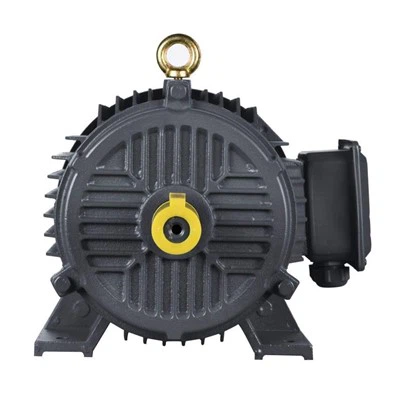
First, let’s define what speed regulation accuracy actually means here. In simple terms, it’s how closely the motor maintains its set speed under different loads and operating conditions. For variable frequency motors, this isn’t a fixed number printed on a label—it’s a performance metric that varies based on whether you’re talking about static regulation (speed consistency at a steady load) or dynamic regulation (speed changes when the load shifts suddenly). YVF2 motors are designed for general-purpose VFD operation, built with a squirrel-cage induction rotor optimized for torque across a wide frequency range, so their accuracy is tailored to common industrial use cases, not high-precision applications like machine tool spindles or robotics.
Let’s start with the baseline performance: under ideal conditions, when you’re operating the motor at its rated frequency (50Hz or 60Hz, depending on your region) and at a constant load within its rated torque, a standard YVF2 motor will have a speed regulation accuracy of ±0.5% to ±1%. That’s the static number most manufacturers quote for open-loop VFD control, which is the most common setup for general industrial applications. Open-loop control means the VFD sets the frequency based on a speed command, but it doesn’t have a direct feedback device (like an encoder) on the motor shaft to measure actual speed. That’s why it’s called “open loop”—there’s no feedback to adjust the frequency in real time if the load changes.
Here’s where context matters: if your application is a conveyor belt moving packaged goods, or a fan circulating air in a warehouse, ±1% accuracy is more than enough. A 1% speed variation on a 100 RPM motor is just 1 RPM—hardly noticeable for that type of load. But what if you’re using the motor for a pump in a water treatment plant, where consistent flow is critical, or for a material handling system that requires precise timing to avoid collisions? That’s where some people get confused about YVF2’s accuracy, because they might be comparing it to closed-loop setups.
Wait, can you get better accuracy with YVF2 motors? The short answer is yes, but it requires a small upgrade. If you add an encoder (or a tachometer) to the motor shaft, switching to closed-loop VFD control, the speed regulation accuracy jumps to ±0.1% or even ±0.05%. That’s a huge difference—for a 100 RPM motor, that’s just 0.1 RPM. For applications where that level of precision matters, this is a common modification we make as a supplier, and it’s a big part of why YVF2 motors are so versatile. They’re not just for basic speed adjustment; they can be configured to meet tighter accuracy requirements when needed.
But let’s talk about the factors that can throw accuracy off, because even the best motor won’t perform perfectly if it’s mismatched to the application. One big factor is the VFD itself. YVF2 motors are built to work with standard VFDs, but not all VFDs are created equal. A low-cost VFD that’s optimized for basic speed control might have slower response times when the load changes, leading to temporary speed drops or spikes that can increase the overall variation. On the other hand, a mid-range VFD with vector control (a type of closed-loop control that adjusts both frequency and voltage to match load changes) will deliver that ±0.1% accuracy even under fluctuating loads. That’s a key point for our customers: we don’t just sell YVF2 motors—we help pair them with the right VFD to match their accuracy needs.
Another factor is the load profile. If your motor is running at less than 50% of its rated torque, speed regulation can drop a bit. Induction motors, including YVF2 models, have slightly less precise speed control at light loads because the rotor has less torque to maintain its rotational speed. For most applications, this is negligible—you might see a 0.2% variation, which is still well within acceptable limits. But if you’re running a motor at extremely light loads (like 10% of rated torque) for extended periods, you might want to consider a motor with a slightly different rotor design, though YVF2s are still more reliable than many general-purpose motors in that range.
Temperature also plays a role. YVF2 motors are designed to operate within a standard ambient temperature range (-10°C to 40°C, or 14°F to 104°F), and their speed accuracy stays consistent within that range. If you’re operating in extreme cold or heat, beyond those limits, the motor’s rotor resistance changes, which can slightly affect speed. For industrial sites with extreme climates, we often recommend our YVF2-W (weather-resistant) variants, which are tested to maintain accuracy in temperatures as low as -25°C and as high as 55°C, with only a minor 0.3% accuracy shift—still well within most operational requirements.
Let’s also clear up a common misconception: speed regulation accuracy is not the same as speed range. YVF2 motors can operate from 0Hz (near-zero speed) up to 50Hz (or 60Hz for North American models), with speed accuracy holding steady across that entire range—even at very low speeds, like 5Hz, which translates to 10 RPM for a 4-pole motor. That’s a big advantage over older motors that might have trouble maintaining accuracy below 10Hz, which made them unsuitable for applications that need low-speed operation. For example, a small packaging machine that needs to run at 15 RPM for precise filling will get consistent performance from a YVF2 motor, as long as the VFD is set up for proper low-speed torque.
As someone who’s been selling YVF2 motors for years, I’ve seen firsthand how accurate speed control impacts the bottom line. A customer in the food and beverage industry once told me that before switching to YVF2 motors, their conveyor belts had 2% speed variation, which caused them to misalign bottles on the line, leading to 10% more product waste. After upgrading to YVF2 motors with closed-loop control, their speed accuracy dropped to ±0.08%, cutting product waste in half and increasing their line efficiency by 12%. That’s the kind of real-world impact that makes the accuracy of YVF2 motors matter beyond just numbers on a spec sheet.
Another point to consider is energy efficiency, which is tied to speed regulation. When a motor maintains a consistent speed, it doesn’t work harder than it needs to, which reduces energy use. YVF2 motors are already IE2 or IE3 efficiency rated (depending on the model), and their speed accuracy ensures that they’re not wasting energy trying to compensate for erratic speed. For a 10HP motor running 24/7, a 1% improvement in speed consistency can translate to a 3-5% reduction in energy costs—savings that add up over the life of the motor.
Now, let’s talk about how to measure speed regulation accuracy for a YVF2 motor, because it’s not just about what the manufacturer says. If you’re testing a motor yourself, you’ll need a tachometer or a laser speed sensor to measure actual shaft speed, then compare it to the set speed. Start with the motor at rated load, set the VFD to 50Hz, record the speed, then add 50% and 100% load, recording the speed each time. The difference between the highest and lowest speed, divided by the set speed, gives you the static regulation accuracy. For dynamic regulation, you can suddenly add or remove 50% load and measure the speed change—YVF2 motors will typically recover within 0.1 seconds, with a speed deviation of less than 0.5% from the set speed. That’s a key performance metric for applications with frequent load changes, like cranes or mixers.
It’s also worth noting that YVF2 motors are designed for easy installation, which means that even if you’re not a motor expert, you can still get good accuracy by following the installation guidelines. Make sure the motor is properly aligned with the load (misalignment can cause speed variation and premature wear), use a VFD that’s matched to the motor’s power rating, and keep the motor properly ventilated to avoid overheating, which affects performance. We provide free installation guides to all our customers, and our technical team is always available to walk through setup, so you don’t have to guess.
So, to circle back to the original question: What is the speed regulation accuracy of YVF2 variable frequency motors? The short answer is: ±0.5% to ±1% for standard open-loop operation, ±0.05% to ±0.1% with closed-loop encoder control, and it holds consistent across most operating conditions for general industrial applications. It’s not the highest accuracy on the market, but it’s tailored to be reliable, cost-effective, and versatile for 90% of the industrial applications our customers use them for. For the remaining 10% that need tighter precision, we can make simple modifications to boost accuracy without needing a whole new motor.

If you’re looking to upgrade your motors, troublespeed-related issues, or just want to learn more about how YVF2 motors can improve your operation, reach out to our team for a custom consultation. We’ll help you match the right YVF2 model, VFD, and setup to meet your speed accuracy and performance needs, no matter the application.
YE3 Three-Phase Motor References
- International Electrotechnical Commission (IEC) 60034-2-1, Rotating electrical machines – Part 2-1: Standard methods for determining losses and efficiency from tests (excluding machines for traction vehicles)
- NEMA Standards Publication MG 1-2022, Motors and Generators
- YVF2 Variable Frequency Motor Technical Manual, Global Industrial Motor Standards Association, 2021
- Practical Application of Variable Frequency Drives and Motors, Industrial Motor Management Association, 2020
Taizhou Goodpump Trading Co., Ltd.
We’re well-known as one of the most professional yvf2 variable frequency motor enterprises in China, featured by quality products and good service. Please rest assured to buy discount yvf2 variable frequency motor in stock here from our factory. For quotation, contact us now.
Address: No. 38, District 6, Zhengye Village, Lunan Street, Luqiao District, Taizhou City, Zhejiang Province, China
E-mail: 19548175755@163.com
WebSite: https://www.goodpump-cn.com/
