If you’ve ever stepped into the power equipment aisle at a farm supply store or stared at a row of lawn tractors at a home improvement center, you’ve probably asked yourself the same question: what’s the real difference between a utility tractor and a lawn tractor? It’s a question I hear every day from contractors, small farm owners, and even homeowners who’ve outgrown their small riding mowers but aren’t sure which machine is right for them. For years, I’ve worked directly with customers as a utility tractor supplier, so I know this isn’t just a trivial distinction—it’s the difference between wasting money on a machine that can’t keep up with your workload and investing in equipment that will pay for itself over time. Let’s break down the key differences, use cases, and why choosing the right one matters. Utility Tractors
First, let’s start with the basics: size and build. Lawn tractors are designed for one primary job: maintaining a residential lawn. They’re compact, light, and built with thin, sharp steel frames and small, low-horsepower engines—usually between 10 and 25 horsepower. Think of them as the compact car of power equipment: nimble enough to weave around flower beds, small trees, and the tight curves of a suburban backyard, but not built to handle rough terrain or heavy loads. Most lawn tractors have a mowing deck mounted directly under the frame, with no extra hydraulics or attachment points for work beyond cutting grass. If you’ve ever tried to use a lawn tractor to pull a bag of soil across a sloped yard or clear brush along a fence line, you know how quickly it strains—its light frame can’t handle the torque, and its tires are designed for smooth grass, not dirt or gravel.
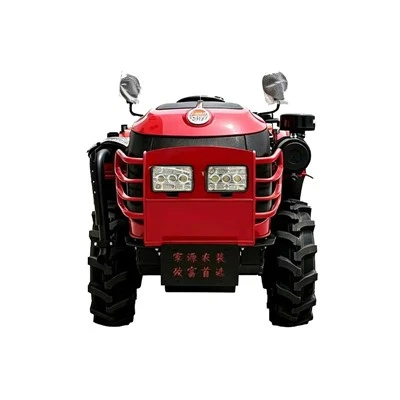
Utility tractors, on the other hand, are heavy-duty workhorses built for serious tasks. Their frames are thick, reinforced steel, with engines ranging from 25 to 70 horsepower (and even higher for industrial models). They’re heavier, often weighing 1,000 to 3,000 pounds, with deep-tread, treaded tires that grip uneven ground, mud, or snow. Unlike lawn tractors, utility tractors are equipped with full hydraulic systems, rear three-point hitches, and front-end loader attachments. That means they can pull, lift, and carry heavy loads—pallets of firewood, bags of fertilizer, fallen branches, even small trailers. The build is designed for durability; these tractors can run for 10+ hours a day, 6 days a week, without overheating, which is unheard of for a lawn tractor.
Next, let’s talk about functionality. A lawn tractor’s entire purpose is mowing. Most models come with a 30 to 54-inch mowing deck, with options for mulching, bagging, or side-discharging grass clippings. That’s it. If your only goal is to keep a 1 to 2-acre residential lawn looking neat, a lawn tractor will do the job fine—for a few years, anyway. But if your property is more than 2 acres, or you have tasks beyond mowing, a lawn tractor will fall short. I’ve had customers come to me after buying a lawn tractor to maintain their 4-acre hobby farm, only to tell me they spent more time pushing it uphill, getting it stuck in mud, or hiring someone to haul materials, than they did actually getting work done.
Utility tractors are multi-purpose machines. Sure, they can mow grass too—many come with 48 to 72-inch mowing decks that cut faster and handle uneven terrain better than lawn tractor decks. But that’s just the start. Attachments are a huge selling point for utility tractors: front-end loaders for digging holes or moving dirt, snow blowers for clearing driveways and sidewalks, rototillers for garden beds, box blades for grading gravel driveways, and even sprayers for pesticides or fertilizer. For small farmers, utility tractors can feed livestock by hauling feed, clear fence lines of brush, or tow a small trailer with harvested crops. For property owners with large lots, they can plow snow in winter, drag a field to spread seed in spring, and haul yard waste all year round. The versatility here is what sets them apart—one utility tractor can replace half a dozen separate tools, saving you money in the long run.
Terrain capability is another big difference. Lawn tractors are designed for flat, manicured lawns. They have a low center of gravity, which makes them unstable on slopes steeper than 10 degrees, and their small, thin tires have little traction on wet or uneven ground. If you try to mow a slope with a lawn tractor, you risk tipping it over or slipping, which is both dangerous and damaging to the machine. Utility tractors, however, have a high, stable center of gravity, heavy weight, and deep-tread tires that let them handle slopes up to 20 degrees or more. They also have better ground clearance—usually 6 to 12 inches, compared to 3 to 5 inches for lawn tractors—so they can drive over rocks, roots, and ruts without getting stuck or damaging the undercarriage. I’ve seen utility tractors pull a stuck ATV out of a muddy ravine, clear brush over rocky ground, and plow snow in a farm driveway with ruts the size of small tires—tasks a lawn tractor wouldn’t even attempt.
Cost is a factor too, and it’s not just the upfront price. A basic lawn tractor costs between $1,500 and $4,000, which is affordable for many homeowners. But those savings often disappear when you factor in limitations. If you need to haul materials, clear brush, or plow snow, you’ll have to rent or buy separate tools, which adds up to hundreds or even thousands of dollars a year. A utility tractor, meanwhile, starts at around $5,000 for a basic model, and goes up to $15,000+ for heavy-duty industrial versions. But because it’s multi-purpose, it eliminates the need for extra tools. For example, a utility tractor with a snow blower attachment can clear your driveway without renting a plow truck, and a front-end loader can move soil without hiring a landscaping crew. Over 5 to 10 years, the utility tractor will almost always save you more money than a lawn tractor that can only mow.
Now, let’s talk about who each machine is for. Lawn tractors are perfect for homeowners with small to medium (1 to 2 acre) flat lawns, whose only big yard task is mowing. If you don’t have a need for hauling, digging, or work beyond grass care, a lawn tractor is a practical, cost-effective choice. But utility tractors are for hobby farmers, small ranchers, property owners with 2+ acres, landscapers, and anyone who needs to get work done beyond mowing. Even if you’re not a farmer, if you have 5 acres of wooded land, a large gravel driveway, or a need to move materials regularly, a utility tractor is the better investment. I’ve had customers use utility tractors for everything from maintaining a small vineyard to clearing hiking trails on a private estate—their versatility makes them useful for way more tasks than just farming.
One common misconception I hear is that utility tractors are too big for residential use. But modern utility tractors come in compact models that are narrow enough to fit through standard backyard gates, with smaller engines that don’t take up more space than a large lawn tractor. The key is to pick the right size utility tractor for your needs, not the largest one you can find. A compact utility tractor with 25 to 35 horsepower is more than enough for most residential or small farm tasks, and it won’t take up extra space in your garage or shed.
Another difference is maintenance. Lawn tractors are simple machines, with fewer moving parts, so maintenance is straightforward: change the oil, replace the spark plug, and sharpen the mowing blades every season. Utility tractors have more complex systems—hydraulics, transmissions, multiple attachment points—but they’re built for heavy use, so their parts are more durable. That said, regular maintenance (oil changes, hydraulic fluid checks, greasing pivot points) is still important, and most utility tractors come with longer warranties because they’re designed to handle more work.
So how do you decide which one is right for you? Ask yourself three questions: First, what’s the size of your property and primary tasks? If it’s under 2 acres and only mowing, go with a lawn tractor. If it’s over 2 acres or you have tasks like hauling, digging, or snow removal, go with a utility tractor. Second, how often will you use it? If you only mow once a week in the summer, a lawn tractor works. If you’re using it 10+ hours a week for multiple tasks, a utility tractor will hold up better. Third, what’s your budget and long-term needs? If you might need extra tools in the future, a utility tractor’s attachments let you expand your capabilities without buying a whole new machine.
As a utility tractor supplier, I’ve seen too many people make the mistake of buying a lawn tractor to save money, only to outgrow it within a year or two. A utility tractor isn’t just a mower—it’s a workhorse that adapts to your needs, grows with your property, and saves you time and money on multiple tasks. Whether you’re a small farmer, a property owner with 5 acres, or a landscaper looking to expand your fleet, the right utility tractor will become the most used tool in your shed.
If you’re ready to stop guessing and find the right machine for your needs, reach out to us to discuss your specific tasks, property size, and budget. We can help you compare models, explore attachment options, and make sure you get a tractor that will work for you for years to come. Don’t waste another season struggling with a machine that can’t keep up—invest in equipment that works as hard as you do.
Utility Tractors References
- Power Equipment Trade Association. (2022). Residential vs. Commercial Power Equipment: Use Case and Build Differences.
- National Agricultural Statistics Service. (2021). Small Farm Equipment Needs and Common Machine Usage.
- Outdoor Power Equipment Institute. (2023). Tractor Size, Capability, and Terrain Compatibility Guide.
- Consumer Reports. (2022). Lawn Tractor vs. Utility Tractor: Cost, Durability, and Functionality Comparison.
- International Society of Agricultural Engineers. (2020). Utility Tractor Hydraulic and Attachment System Design.
Shandong Jiayuan Agricultural Equipment Co., Ltd.
As one of the most professional utility tractors manufacturers and suppliers in China, we have world-leading production equipment and strong manufacturing capabilities. Please feel free to buy advanced utility tractors for sale here from our factory.
Address: No.2, No.002777 Zhongjiang West 4th Street, Yangzi Subdistrict, Binhai District, Weifang City, Shandong Province, China
E-mail: sdjynyzb@163.com
WebSite: https://www.jiayuantractor.com/
