Hey everyone, if you’re in the power generation, cement, or steel industries, you know air preheaters (APH) are non-negotiable—they recycle waste heat from flue gases to heat combustion air, which cranks up efficiency and cuts fuel costs. But here’s the deal: if your APH’s seals are leaking, all that efficiency goes out the window. As someone who’s been in the air preheater seal supply game for over a decade, I’ve heard way too many plant ops scratch their heads trying to figure out how to actually measure that leakage—half the time they’re guessing, and the other half they’re using methods that are either super time-consuming or just plain wrong. Today, I’m breaking down the practical, science-backed ways to measure APH seal leakage, no fancy jargon required. Air Preheater Seal

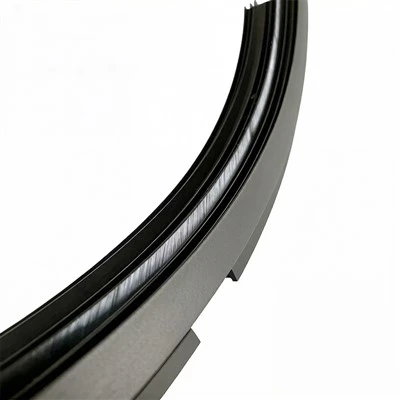
First, let’s get on the same page about what APH seal leakage even is. Most large APHs are either rotary (the most common) or fixed, but we’re gonna focus on rotary ones ’cause that’s where 90% of the seal issues happen. Rotary APHs have a rotating rotor with heat-exchange elements, and seals are between the rotor and the stationary casing to stop hot flue gas (on one side) and cold combustion air (on the other) from mixing. Leakage is just the amount of that cross-flow—if it’s too high, you’re wasting fuel, reducing boiler output, and even risking damage from uneven heating. The goal is keeping it under 10-15% for most utility APHs, right?
Now, the first method almost every plant uses: Air Flow Differential Test. It’s straightforward, no fancy tools, just your existing plant instruments. Here’s how it works: You measure the air flow on the cold side (the combustion air going into the APH) and the flue gas flow on the hot side (coming out of the APH). But wait, it’s not just raw flow numbers—you have to adjust for temperature and pressure, ’cause gas density changes with those. Let me make it simple: say your induced draft (ID) fan pulls flue gas at 300°F, and your forced draft (FD) fan pushes air at 100°F. Use the ideal gas law to correct both flows to standard conditions, then calculate the difference. If flue gas flow is way less than you expected compared to air flow, that’s the leakage. I’ve seen guys mess this up by not correcting for density—like, last year a plant told me their leakage was 18%, but after fixing the temp/pressure correction, it dropped to 9%. That’s the thing: this method is quick, takes 15 minutes with existing tools, but it’s indirect. It measures total leakage, not which seal (radial, axial, circumferential) is bad. Good for a quick check, but not for troubleshooting.
Next, the method we rely on every day for our customers: Gas Concentration Tracer Test. This is way more accurate, and tells you exactly how much leakage is coming from the seals, not other gaps. The idea is: inject a harmless tracer gas—usually sulfur hexafluoride (SF6) ’cause it’s heavy, easy to detect, and doesn’t react with flue gases—into the cold air side of the APH. Then you sample the hot flue gas side, measure how much SF6 is there. Since SF6 shouldn’t be in flue gas otherwise, the amount you find is directly from seal leakage. Let’s do a quick math example: if you inject 100 liters of SF6 into the air side, and sample 5 liters in the flue side, leakage is 5%—that’s simple. The trick here is where you inject and sample. Don’t dump the SF6 right at the FD fan inlet—put it in the main air duct just before it hits the APH. For samples, take multiple points across the flue duct, not just one spot, ’cause gas mixes unevenly. I always tell my customers to use a portable SF6 detector—they run like $2k, but way cheaper than shutting down a plant for a week to replace seals unnecessarily. The downside? It takes a bit more prep, and you can’t run this test if the APH is off (obviously) or if there’s too much draft messing with gas flow. But when you need exact numbers, this is the gold standard.
Wait, there’s another one for older plants or if you can’t get a tracer gas: Pressure Drop Test. This is super basic, but a lot of people forget it. Rotary APHs have different pressure zones: the cold air side is at a higher pressure than the hot flue side (that’s how the flow works, duh). Seals are supposed to maintain a tight barrier between these two pressures. If you measure the pressure difference across each seal section—radial (between rotor and casing sides), axial (between rotor top/bottom and casing), circumferential (between rotor diameter and casing)—low pressure difference means a leaky seal. For example, a good radial seal should have a 1-2 inch water column (inH2O) pressure drop; if it’s less than 0.5 inH2O, that seal’s blown. The key here is to do this when the APH is at operating load—idle mode pressure is way different. I once worked with a plant that thought their radial seals were fine, but a pressure test showed circumferential seals were leaking bad, which we fixed, and their fuel use dropped 8%. It’s free, uses a manometer you probably already have, but again, it’s indirect—can’t tell total leakage, just pressure gaps.
Now, let’s talk about common mistakes people make when measuring, ’cause that’s where most of the bad data comes from. First, testing at low load. APHs move differently when they’re running at 50% load vs 100%—the rotor expands or contracts, seals might rub or gap. If you test at half load, your numbers are off, so you end up replacing seals that don’t need it, or missing a leak that’s bad at full load. Second, ignoring temperature drift. The ideal gas law? If you don’t account for flue gas getting hotter, your flow numbers are wrong. Third, bad sampling for tracer tests. If you sample only near the duct wall, you might miss the SF6 that’s mixing in the center, so you underestimate leakage. And fourth, skipping pre-test checks. Like, make sure the APH’s inspection doors are closed, no gaps in the casing—if air is leaking through a loose door, that’s not seal leakage, it’s a casing gap. I once had a customer who spent 3 hours doing a tracer test, only to find a door was ajar—we fixed that door, and leakage dropped 2 points right away.
Also, pro tip: combine two methods for best results. Do a quick air flow differential first to get a rough number, then a tracer test to confirm and find which seal is bad. If you see high leakage from the tracer test, and the pressure test shows radial seals have low pressure drop, you know exactly which seals to replace, not all of them. That saves you time and money—no need to rip out every seal, just the bad ones.
Wait, let’s also mention what’s considered “normal” leakage, so you know when you need to act. For a new rotary APH, leakage should be 5-10%. For older ones, up to 15% is manageable, but anything over 20%? That’s costing you real cash. I’ve done calculations for a 500MW plant—if leakage goes from 15% to 25%, they’re burning an extra $50k in fuel every month. That’s why measuring leakage isn’t just a check, it’s a cost-saver.
Now, if you’re reading this and thinking “yeah, my APH’s been running weird, maybe I need help measuring or fixing seals”—that’s what we do. We supply custom APH seals, and we work with plant ops to measure leakage accurately, no guesswork. If you’re tired of inefficient fuel use, or you replaced seals before and they didn’t fix the leak, hit us up. We can come out with our portable tracer test gear, do a full scan, tell you exactly what’s wrong, and get you the right seals to fix it.
Before I wrap up, let’s hit the basics again to make sure you don’t forget: 1) Air Flow Differential = quick, indirect, good for initial check; 2) SF6 Tracer Test = accurate, identifies which seal is leaking, gold standard for precision; 3) Pressure Drop Test = free, uses existing tools, good for troubleshooting. And always test at full load, close all casing gaps, and combine methods for the best data.
If you have questions, or you need help measuring your APH’s leakage, don’t hesitate to reach out. We’re here to make sure you’re not wasting fuel or money on unnecessary repairs.
Air Preheater Seal References
- Power Plant Air Preheater Performance Test Code, American Society of Mechanical Engineers (ASME PTC 4.3-2014)
- Rotary Air Preheater Seal Leakage Mitigation, International Society of Automation (ISA)
- Industrial Boilers and Heat Recovery Steam Generators: Design, Applications, and Calculations, CRC Press
Jiangsu Turbine Electric Power Technology Co., Ltd.
As one of the most professional air preheater seal manufacturers and suppliers in China, we have world-leading production equipment and strong manufacturing capabilities. Please feel free to buy advanced air preheater seal for sale here and get pricelist from our factory. Customized orders are welcome.
Address: Building 8, Huaqi Yungu Xuzhou Lingang Industry Accelerator, Jiawang District, Xuzhou City, Jiangsu Province
E-mail: zjh800@163.com
WebSite: https://www.cnturbine.com/
