Hey everyone, thanks for stopping by! As someone who’s spent the last 8 years working with commercial reverse osmosis membranes—like, I’ve seen every kind of fouling mess you can think of, from bio-slime that looks like old pancake batter to mineral scales so thick they sound like gravel when you tap the membrane housing— I get how frustrating fouling is for any operation that relies on RO. Whether you’re running a food and beverage plant, a municipal water treatment facility, or an industrial zero-liquid-discharge setup, fouling isn’t just a “minor inconvenience” — it cuts your membrane lifespan in half, cranks up energy bills by 30% or more, and wastes so much time on cleaning that you could almost run a whole extra shift. Today, I’m breaking down exactly how to prevent this from happening, straight from the guy who sells and services these membranes every single day. No fancy jargon, no textbook fluff—just what actually works. Commercial RO Membrane
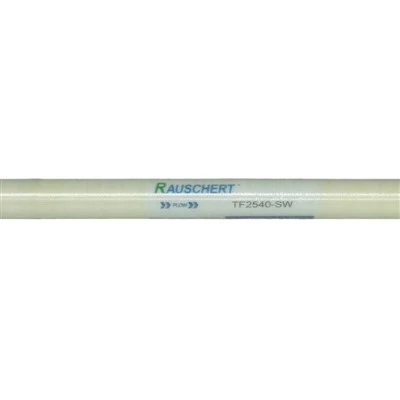
First, let’s get one thing straight: fouling doesn’t just “happen out of nowhere.” It’s almost always a mix of avoidable mistakes. Let’s start with the basics that a lot of ops teams skip because they’re busy—feed water pretreatment. I can’t tell you how many times a customer calls me panicking because their membranes are fouled, and when I look at their pretreatment system, there’s no filter cartridge, or the multmedia filter hasn’t been backwashed in 6 months, or their antiscalant dosing pump is broken and someone just turned it off. Pretreatment is your first line of defense, and skimping here is like skipping a helmet when you ride a bike. Let’s break down what pretreatment you actually need, depending on what you’re working with.
If you’re dealing with surface water—like from a river or lake—you’ve got two big threats: silt and organic matter. Silt is the dirt and clay that makes water look murky, and organic matter is the algae, leaves, and bacteria that get washed into the water. For these, you don’t need some $10,000 fancy system. A good 5-micron cartridge filter right before the RO feed pump catches most silt, but for really heavy silt, add a multimedia filter with sand and anthracite. And don’t forget to backwash that filter every 12 to 24 hours—set a reminder, I swear, because if you skip that, the silt builds up so much the filter stops working, and it all goes straight to your membranes. For organic matter, a carbon filter is non-negotiable. Activated carbon binds to those organic molecules that would otherwise stick to your membrane surface. I’ve seen customers go 2 years without a carbon filter, and their membranes were completely sealed shut with bio-fouling by year one. Total rewrite: I’ve seen customers go 2 years without a carbon filter, and their membranes were completely sealed shut with bio-fouling by year one. That’s not a risk you want to take.
Then there’s groundwater, which is usually harder than surface water—meaning way more dissolved minerals like calcium, magnesium, and silica. That’s where scaling comes from, which is the worst kind of fouling because it’s rock-hard and almost impossible to clean off once it’s set. For scaling, antiscalant dosing is your main tool, but not just any antiscalant. A lot of guys try to cut corners by using the cheapest antiscalant they can find, but that’s a mistake. Antiscalants work by sequestering mineral molecules so they don’t crystallize on the membrane, but cheap ones often only work for one or two minerals, whereas a good one works for 5 or 6, including silica, which is a tricky one that a lot of antiscalants miss. Also, you have to dose it correctly—don’t just eyeball it. Most systems need 2 to 5 milliliters per liter of feed water, based on the total dissolved solids (TDS) and hardness. If you dose too little, scales forms; too much, and you get organic fouling from the antiscalant itself. I’ve had to clean membranes where the antiscalant dose was 10x too high, and it left a slimy residue that was even worse than mineral scale. For groundwater high in silica, you might also need a silica filter or adjust the pH—lowering pH to 5.5 to 6.5 keeps silica from crystallizing, but only if you do it right; mess with the pH too much, and you can damage the membrane.
Next up, something that’s way underrated: monitoring your system in real time. A lot of people only check their TDS once a month, but by then, fouling is already advanced. What you need is a basic online monitoring system that tracks feed pressure, permeate flow, and pressure difference across the membrane (that’s called delta P). Let me explain: when your membranes are clean, delta P is usually 5 to 10 psi per 8-inch membrane element. If that delta P starts climbing faster than 0.5 psi per week, that’s a red flag—something’s building up on the surface, and you need to act fast. I had a customer last year who ignored a delta P spike of 1.2 psi a week, and by the time they called me, half their elements were fouled so bad they had to replace them early. That cost them $12,000 in new membranes—money they could’ve saved just by adjusting their antiscalant dose or flushing the system earlier. Also, monitor permeate flow. If your flow drops 15% or more from the design, that’s another sign of fouling, even if the delta P is still low. Biofouling, for example, usually lowers flow first before raising pressure, so if you only check delta P, you’ll miss it.
Then there’s regular, proper flushing and clean-in-place (CIP) procedures. Flushing might sound like a hassle, but it’s one of the cheapest, most effective fouling prevention tools you have. Most commercial RO systems should be flushed with clean product water for 10 to 15 minutes every time they shut down—especially if they’re going to be offline for more than an hour. When the system is off, stagnant feed water sitting on the membrane is a breeding ground for bacteria and organic matter. I’ve seen systems that ran 24/7 without flushing develop a full bio-slime layer in 3 months; another customer who flushed every shutdown went 18 months without any biofouling. Also, don’t just flush with any water—use your own permeate, not raw feed water, because permeate is already clean and won’t add any contaminants.
As for CIP, that’s not just for when fouling is bad—it’s a regular maintenance step. How often you need to do it depends on your feed water, but a good rule of thumb is every 3 to 6 months for most industrial systems, and every 6 to 12 months for municipal systems with good pretreatment. The key here is using the right CIP chemicals for the right fouling type. If you have mineral scaling, use a low-pH CIP solution (around pH 2 to 4) with a citric acid or hydrochloric acid-based cleaner. If it’s organic or biofouling, use a high-pH CIP (around pH 10 to 11) with a non-ionic or anionic detergent. A lot of guys just grab the cheapest CIP cleaner off the shelf and hope for the best, but if you use the wrong one, you can damage the membrane. For example, using a low-pH cleaner on biofouling won’t touch the slime, and using a high-pH cleaner on mineral scale will just sit on top of it. Also, don’t leave the CIP solution in the membranes for more than 30 to 45 minutes—if you let it sit longer, it can actually break down the membrane’s polyamide layer, reducing its lifespan.
Another thing that a lot of people sleep on: membrane orientation and system loading. When you’re installing new membranes, make sure you’re loading them correctly—feed water flows from the end of the pressure vessel with the “feed” end of the element, not the “product” end. It sounds stupid, but I’ve seen installers flip elements, and that leads to uneven flow, which causes some parts of the membrane to get fouled way more than others. Also, don’t overcrowd your pressure vessels. Most 4-inch pressure vessels hold 6 elements, and 8-inch hold 8—but don’t put extra elements in there just to save space, because that increases pressure drop too much and can cause fouling in the last elements, which have the hardest water to treat. I had a customer who crammed 7 elements into a 6-element 4-inch vessel, and the last element had a delta P of 20 psi, double what it should be. We had to pull that element out—it was completely coated in scale.
Oh, and let’s talk about something specific to food and beverage operations, or any system that handles wastewater: particulate and organic load spikes. If you’re running a brewery, for example, your feed water might have a bunch of yeast and sugar waste during brewing season, and those spikes can blow right past your pretreatment and foul membranes fast. For those, you might need a safety cartridge filter with a smaller micron rating—like 1 micron instead of 5—during high-load periods, or add a coagulant to your multimedia filter. Coagulants bind to tiny particles and organic matter so they get caught in the filter, instead of going to the RO. Just make sure you’re using a coagulant that’s compatible with your membrane—some can leave a residue, so test a small amount first.
Wait, let’s also address a common myth: “more pretreatment is always better.” No, it’s not. If you add a carbon filter when you don’t have a lot of organic matter, or an antiscalant for minerals you don’t have, you’re just adding extra chemicals that can cause organic fouling or leave residues. You need to test your feed water regularly—like every 3 to 6 months, more often if your source changes—to know exactly what you’re dealing with. Test for TDS, hardness, silica, organic carbon, and bacteria. That way, you’re not guessing—you’re targeting exactly the contaminants that can cause fouling. I have a customer who started testing their water every 3 months, and they cut their membrane replacement cost by 40% because they adjusted their antiscalant dose and cleaned their CIP schedule to match their actual water quality.
Now, let’s talk about what to avoid, because there are a few things that almost always lead to fouling. First, backwashing your multimedia filter too hard. A lot of people crank the backwash flow to get it done faster, but if you backwash too hard, you fluidize the sand and anthracite, and small particles get pushed through the filter and into the RO. Backwash at a flow rate that lifts the media 20 to 30%—that’s the sweet spot. Second, ignoring small leaks in your pretreatment system. A tiny crack in a carbon filter housing lets raw water bypass the carbon, so all the organic matter goes to the membranes. I had a customer with a $50,000 RO system who didn’t fix a $20 O-ring leak, and it cost him $8,000 in membrane cleaning and replacement. Third, using old membranes. Even if you take perfect care of them, membranes only last 5 to 7 years. If yours are over 7, don’t wait for fouling to happen—plan to replace them, because the polyamide layer breaks down over time, making it way easier for contaminants to stick.

At the end of the day, fouling prevention isn’t rocket science—it’s consistent, small steps that add up. It’s not just buying the best membrane (which, by the way, we make some of the most durable, fouling-resistant commercial RO membranes on the market, engineered to handle tough feed water without as much maintenance) — it’s pairing a quality membrane with good pretreatment, real-time monitoring, regular flushing, and targeted CIP. If you’re struggling with fouling, or just want to make sure your system is set up to prevent it, we’re here to help. We don’t do complicated sales pitches—we’ll come out, test your feed water, check your system, and give you a clear, actionable plan to cut down on fouling, save money on energy and membrane replacements, and keep your RO running smoothly. Just reach out to us, and we’ll get your system on track.
Nanofiltration Membrane References
- "Reverse Osmosis Membrane Fouling: Causes, Prevention, and Cleaning Methods," Water Research Foundation, 2021.
- "Commercial RO System Pretreatment Guidelines," International Water Association, 2020.
- "Antiscalant Dosing Optimization for Industrial RO Applications," Desalination Journal, Vol. 452, 2019.
- "Membrane Flushing and CIP Protocols for Long RO Lifespan," American Water Works Association, 2022.
Fujian Huamo Technology Co., Ltd.
Fujian Huamo Technology Co., Ltd. is one of the most professional commercial ro membrane manufacturers and suppliers in China, featured by quality products and good service. Please rest assured to wholesale the best commercial ro membrane made in China here and get price list from our factory. Contact us for custom service and OEM service.
Address: No.6 Hengtong Rd, Shanmei Village, Xiamei Town, Nanan City, Fujian Province, China
E-mail: info@huaromembrane.com
WebSite: https://www.hmromembrane.com/
