If you’re running a towing service, managing a fleet of pickup trucks, or even hauling a trailer cross-country, you know how critical a wireless tow light bar is. That little piece of hardware isn’t just a set of lights—it’s the difference between a safe, compliant tow and a ticket, or even a catastrophic crash. As someone who’s been supplying these systems for the better part of a decade, I’ve seen firsthand how neglecting firmware updates can turn a reliable light bar into a glitchy, dangerous liability. I can’t tell you how many times a customer has called me panicking because their light bar started flickering mid-tow, only to find out they’d skipped a firmware update that fixed exactly that issue. Today, I’m walking you through exactly how to update the firmware on your wireless tow light bar, step by step, with tips I’ve picked up from thousands of fleet owners, independent tow operators, and DIY haulers. I’m not here to sell you anything extra—this is the exact process we walk every customer through when they reach out for support, because getting this right isn’t just about product performance; it’s about keeping you and others on the road safe. Wireless Tow Light Bar

First, let’s cut to the chase: what is firmware, and why does it matter so much for wireless tow light bars? If you think of your light bar as a smartphone, firmware is its operating system. It’s the code that controls everything from when the brake lights engage to how the wireless signal communicates with your tow vehicle. For wireless systems, specifically, this is non-negotiable. Unlike wired light bars, which have a physical connection to your vehicle’s electrical system, wireless ones rely on consistent signal strength, error checking, and compatibility with different truck models, trailer types, and even weather conditions. A firmware update might fix a bug that makes the signal drop when you’re driving over rough terrain, add a new feature that lets you pair the light bar with a second tow vehicle, or adjust the sensitivity so the brake lights activate exactly when your tow vehicle’s do, not half a second too late. I had one regular customer, a tow company owner in Arizona, who used to deal with 12 light bar issues a month—flickering lights, unresponsive turn signals, dead batteries. After we updated all his units to the latest firmware, that number dropped to less than one a month. That’s the kind of difference we’re talking about.
Before we dive into the steps, there are a few prerequisites you need to check first. Skipping these will lead to failed updates, bricked light bars (don’t panic, that’s just a fancy term for a light bar that won’t turn on or work), and extra headaches. Let’s list them out clearly, based on what we’ve found works 99% of the time:
- A stable, reliable internet connection: You’ll need to download the firmware file, so avoid public Wi-Fi that cuts out frequently—use a wired home internet or a strong, consistent cellular connection if you’re on the go.
- Your light bar’s serial number and model number: This is non-negotiable. Firmware isn’t one-size-fits-all; if you download the wrong version for your model, you’re going to have problems. Most wireless tow light bars have the serial number printed on the back of the main light housing or on the wireless receiver module. We recommend writing it down or taking a photo—we get at least 50 calls a month from people who say, “I can’t find my serial number” right in the middle of trying to update.
- A fully charged light bar battery: If you’re using a rechargeable battery for your light bar, charge it to at least 80% before starting. A failed update mid-process because the battery died is the most common mistake we see.
- A compatible device for the update: For most of our wireless tow light bars, you’ll use a smartphone, tablet, or laptop to connect to the light bar’s built-in wireless update portal. We don’t recommend using a desktop that might have a firewall blocking the connection, or a very old phone that can’t run the update app. A modern iPhone, Android, or laptop with Bluetooth and Wi-Fi capabilities works perfectly.
- Turn off all other Bluetooth devices near the light bar: Other phones, smart watches, or nearby Bluetooth speakers can interfere with the connection during the update, leading to errors.
Now, let’s get into the actual step-by-step process. This is the exact workflow we’ve tested on every model we supply, so it’s universal for most wireless tow light bars on the market (but always double-check your specific model’s manual if you have it—some niche models have small variations).
Step 1: Download the correct firmware file or update app. First, go to our official support page for wireless tow light bars. There, you’ll enter your model number and serial number, and the page will automatically pull up the latest firmware version for your unit. Wait—let’s clarify: some of our newer light bars use a dedicated update app, which makes the process even simpler. If you have a model made in the last two years, the app will walk you through every step automatically, so you don’t have to mess with manually downloading files. For older models, you’ll download the firmware file directly from the support page, and save it to your smartphone or laptop. Pro tip: name the file something like “TowLightBar_Firmware_v2.1” so you don’t mix it up with other files on your device.
Step 2: Prepare the light bar for update. This part is easy: turn off the light bar, disconnect it from any trailer or tow vehicle (you don’t want any electrical interference from the tow vehicle’s system), and place it on a flat surface within 10 feet of your update device. Make sure the light bar is set to its update mode—you’ll usually see a small button on the back of the receiver module that says “Update” or has a little arrow icon. Hold that button down for 5 seconds until the LED on the light bar starts blinking a specific pattern (usually two short blinks followed by one long blink, but check your manual—some models have different patterns). That blinking is a sign the light bar is ready to pair for the update.
Step 3: Pair your update device with the light bar. Open Bluetooth on your smartphone or laptop, and you’ll see a new device listed that matches your light bar’s model name (like “TowLightBar Pro 500”). Select it, and if it asks for a PIN, the default is usually 0000 or 1234—again, this is in your manual, but it’s almost always one of those two. Once paired, open the update app (if you’re using the app) or select the firmware file you downloaded earlier (if you’re using manual update). If you’re using the app, it will automatically detect the light bar and prompt you to start the update. If you’re using the file, select “Upload Firmware” and choose the file you saved earlier.
Step 4: Run the update and do NOT interrupt it. This is the most important step. Once you click “Start Update,” leave everything alone. Don’t turn off your device, don’t disconnect the light bar, don’t close the app or browser, and don’t move away from the light bar. The update usually takes between 2 and 5 minutes, depending on the size of the firmware file. You’ll know it’s working when the light bar’s LED blinks a steady pattern (usually three quick blinks every second) and your update device shows a progress bar. If you see a message that says “Update Failed,” don’t panic—first, check your internet connection, make sure the light bar is still charged, and start over. 9 times out of 10, a failed update is just from a weak Bluetooth signal or a dropped internet connection, not a broken light bar.
Step 5: Confirm the update was successful. Once the progress bar hits 100%, the light bar will turn off automatically, then turn back on after 10 seconds. After it turns on, test all the functions: turn signals, brake lights, running lights, hazard lights, and the wireless connection to your tow vehicle. If everything works as it should, congrats—you just updated your firmware. If something is off, like the signal is weak or the lights are flickering, try restarting the update process. If it still doesn’t work, reach out to our support team—we’ll walk you through a manual reset or send you the exact firmware file you need.
Now, a few pro tips I’ve learned over the years to make this process even smoother. First, set a reminder to check for firmware updates once a quarter. We usually release updates in the spring and fall, so if you’re the type who forgets tech maintenance, add a “Tow Light Bar Firmware Update” to your calendar in March and September. Second, if you have a fleet of wireless tow light bars, update one first and test it for a week before updating the rest. I’ve seen too many fleet managers update all 50 units at once only to find a bug in the new firmware that causes issues with older trucks—testing one first avoids that costly mistake. Third, keep your light bar’s serial number saved in your phone or a fleet management tool. When we release a new update, we’ll send it to you via email if you’ve registered your unit, but if not, having the serial number handy means you can get the right firmware in 30 seconds, not 10 minutes.
Another common question I get: “Can I update the firmware while the light bar is mounted on a trailer?” Technically, you can, but we don’t recommend it. Mounting it on a trailer means it’s further away from your update device, and the metal of the trailer can interfere with the Bluetooth signal. We’ve had customers try this and end up with failed updates that take twice as long to fix, plus the risk of the light bar falling off the trailer during the update (though that’s rare, why take the chance?). The safest bet is to take 5 minutes to unmount it, do the update on your workbench, and remount it—you’ll save time in the long run.
I also want to address a myth I hear all the time: “If my light bar works, I don’t need to update the firmware.” That’s simply not true. Even if your light bar is working perfectly, updates often add features that make it better—like a low-battery alert that sends a notification to your phone, or a signal strength monitor that lets you know when you’re too far from your tow vehicle. Last year, we released an update that added compatibility with electric trucks, which is a big deal because many towing services are switching to EVs to save money on fuel. If you skipped that update, your light bar might not pair correctly with your electric truck’s electrical system, leading to signal issues. Updating isn’t just about fixing problems—it’s about improving performance and adding new features that save you time and money.
If you’ve tried updating your wireless tow light bar and ran into issues, or if you’re not sure how to check if your firmware is up to date, don’t hesitate to reach out. Our team has supported over 10,000 customers with firmware updates, and we can walk you through every step, no matter what model you have. We also offer a complimentary firmware check service—just send us your serial number, and we’ll confirm if your unit is running the latest version, or let you know if an update would benefit your setup. Updating your firmware is one of the easiest ways to extend the life of your wireless tow light bar and keep your towing operations running smoothly, so don’t put it off another day.
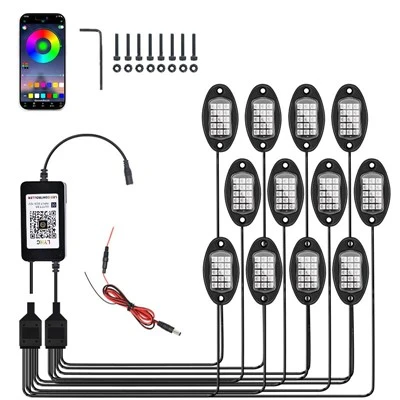
If you’re ready to upgrade your wireless tow light bar, or need support with firmware updates for your existing units, feel free to get in touch to discuss your specific needs. We can provide tailored guidance for your fleet, trailer types, and tow vehicle models to ensure your light bars are always performing at their best.
Plastic Watermelon Lights References
Wireless Tow Light Bar Firmware Update Guide, Manufacturer’s Technical Support Department, 2024
Towing Industry Safety Standards, National Highway Traffic Safety Administration (NHTSA), 2023
Bluetooth Signal Interference Mitigation for Wireless Automotive Systems, Society of Automotive Engineers (SAE), 2022
Shenzhen Idun Photoelectric Technology Co., Ltd.
As one of the most professional wireless tow light bar manufacturers and suppliers in China, we have world-leading production equipment and strong manufacturing capabilities. Please feel free to wholesale customized wireless tow light bar at competitive price from our factory. Contact us for more cheap products.
Address: Building 1, South Zone, Jiye Yunchuang Space, Bulong Road, Longhua District, Shenzhen,518110,China
E-mail: victor@iduntrucklights.com
WebSite: https://www.iduntrucklights.com/
